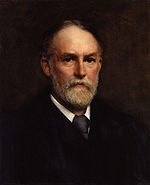
Showing posts with label Pioneers of Spiritualism. Show all posts

Tuesday, June 21, 2011

Was Abraham Lincoln a Spiritualist ?

One of the world's largest Spiritualist organisations, the SNU in England has many free books on Spiritualism that can be downloaded including one with the above title.

This is a list of the books available and their sizes. Go to the SNU website here.

Beyond the Five Senses L Margery Bazett 75 183k 1946
The Seven Principles George F. Berry
(SNU President 1920)
13 41k 1921
Trance Addresses 1866 Emma Hardinge Britten 105 327k 1866
Researches Sir William Crookes 65 208k 1926
The Universe and Man James F. Malcolm O.B.E 28 84k 1964
Was Abraham Lincoln a Spiritualist? Nettie Colburn Maynard 54 157k 1917
Glimpses of the Next State
(The education of an agnostic)
Vice Admiral W. Usborne Moore 273 941k 1911
The Voices   252 754k 1913
Spirit Identity by the Direct Voice   19 60k 1914
Spirit Teachings William Stainton Moses 195 558K 18??
More Spirit Teachings William Stainton Moses 72 220k 18??
The Life Beyond The Veil Rev. G. Vale Owen 92 282k 1920
Spiritualism in the Evolution of Philosophy Ernest Thompson MSNU 64 211k 1950
The Reality of Psychic Phenomena W. J. Crawford 117 680k 1916
The SNU in 1936

Monday, June 13, 2011

The inventor of television and Spiritualism

I am convinced that discoveries of far-reaching
importance remain waiting along these shadowy and discredited paths
John Logie Baird
John Logie Baird on Spiritualism
The Fox Sisters
 
The world's most eminent scientists are not usually associated with the dim-lit surroundings of a clairvoyant's parlour.
But some of science's biggest names have not only dabbled in, but been entirely convinced by the world of the seance.

Guglielmo Marconi, Alexander Graham Bell and John Logie Baird are familiar to most for the household indispensables they invented. But the attraction to spiritualism they all shared is definitely not part of the GCSE science syllabus.
All three men, and many other Victorian scientific pioneers, became involved with the religion, which depended on strange forces being demonstrated through bizarre phenomena.
Read the full story here

Saturday, June 4, 2011

A psychic medium who works with children

Chip Coffey is a psychic medium who works with children to help them regain control of their psychic abilities. Through his work he can help a child become more in tune and less afraid of the spiritual activity around them.

Friday, May 20, 2011

another good read

On the subject of the new internet newspaper Spirit of PN they also have a section selling books of interest and this happens to be one we have read and recommend ( and it's very inexpensive)
Visits by Our Friends from the "Other Side": The Remarkable Mediumship of Minnie Harrison
By Thomas Harrison


Price: £3.50 & eligible for FREE Super Saver Delivery.
Go to the Spirit of PN website and browse their books.

Thursday, April 28, 2011

Can you see the ghost in this picture? Spirits haunt derelict asylum

    Can you see the ghost in this picture? Spirits haunt derelict asylum

THEY are haunting images of bedlam - an Australian lunatic asylum that opened more than 170 years ago.
An exhibition by photographer Yvette Worboys titled Ghosts has captured eerie images of the former Gladesville Mental Hospital, in Sydney, which opened in November 1838 and closed in 1997.
Worboys, who has lived in the area most of her life, said she was drawn to the partly derelict hospital by its residual energy.
"There is quite a presence, an energy, there," Worboys said.

More than 1200 patients are buried in unmarked graves on the property. Ms Worboys said psychics asked to analyse her photos believed there was a presence in them.
"Mediums have looked at the images and seen a presence there," she said.

Read the full story in the Herald Sun

Monday, April 25, 2011

Scientist Proves ESP Is Real

From the New York Times :

Prof Bem
One of psychology’s most respected journals has agreed to publish a paper presenting what its author describes as strong evidence for extrasensory perception, the ability to sense future events.

The decision may delight believers in so-called paranormal events, but it is already mortifying scientists. Advance copies of the paper, to be published this year in The Journal of Personality and Social Psychology, have circulated widely among psychological researchers in recent weeks and have generated a mixture of amusement and scorn.

The paper describes nine unusual lab experiments performed over the past decade by its author, Daryl J. Bem, an emeritus professor at Cornell, testing the ability of college students to accurately sense random events, like whether a computer program will flash a photograph on the left or right side of its screen. The studies include more than 1,000 subjects.

Some scientists say the report deserves to be published, in the name of open inquiry; others insist that its acceptance only accentuates fundamental flaws in the evaluation and peer review of research in the social sciences.
“It’s craziness, pure craziness. I can’t believe a major journal is allowing this work in,” Ray Hyman, an emeritus professor of psychology at the University Oregon and longtime critic of ESP research, said. “I think it’s just an embarrassment for the entire field.”

The editor of the journal, Charles Judd, a psychologist at the University of Colorado, said the paper went through the journal’s regular review process. “Four reviewers made comments on the manuscript,” he said, “and these are very trusted people.”

All four decided that the paper met the journal’s editorial standards, Dr. Judd added, even though “there was no mechanism by which we could understand the results.”

But many experts say that is precisely the problem. Claims that defy almost every law of science are by definition extraordinary and thus require extraordinary evidence. Neglecting to take this into account — as conventional social science analyses do — makes many findings look far more significant than they really are, these experts say.

“Several top journals publish results only when these appear to support a hypothesis that is counterintuitive or attention-grabbing,” Eric-Jan Wagenmakers, a psychologist at the University of Amsterdam, wrote by e-mail. “But such a hypothesis probably constitutes an extraordinary claim, and it should undergo more scrutiny before it is allowed to enter the field.”…
[continues in the New York Times]

Saturday, April 16, 2011

What Happens at a Psychic's Funeral ?

UPDATED, 9 April: No tears were shed when Ian Lawman, a British TV psychic and exorcist, was laid to rest on a windswept hill in the West Midlands today. I was among those who attended his interment, which turned out to be a fun event for all involved, including Ian. In fact, he happily posed for photographs before his burial (right). As you will have guessed by now, Ian - whose TV appearances have included Most Haunted, I'm Famous and Frightened, and Fit and Fearless - was not dead when they buried him. And he doesn't plan to be dead when they dig him up again in seven days' time. So why has the self-styled "bad boy of the psychic world" decided to subject himself to the ordeal of being entombed in a coffin six feet underground, beneath two tonnes of soil? To raise £10,000 for The Blue Lamp Foundation, which was set up by PC David Rathband for injured emergency service workers after he was blinded when gunman Raoul Moat went on a rampage last year. The buried-alive event took place .........
Read more at Roy Stemmen's Paranormal Review

Monday, April 11, 2011

Physical Medium Stewart Alexander Publishes Memoirs

"IT’S NOT everyday that a Spiritualist book is published by a world renowned physical medium. As such, I was delighted to receive Stewart Alexander’s Memoirs recently and have spent many a happy hour savouring the treasure trove of anecdotes and thought provoking views expressed therein.

Stewart Alexander has been involved with Spiritualism for over 40 years, firstly as a researcher and then combined with his work and development as a physical medium. For these reasons, this book offers the reader a quite unique perspective on the subjects he covers.

For we are not reading the views of a purely ‘armchair observer’ of physical phenomena here. We get to see things from the actual medium’s point of view - from behind the seance room curtain. This in itself offers the reader an invaluable opportunity."
Read the full story at The Psychic Times

Thursday, February 17, 2011

The Afterlife : Frederic William Henry Myers

Frederic Myers

Frederick Myers was a professor of classics at Cambridge University in England. He was born in 1843 and he died in 1901. One overriding interest characterized this man: a passionate curiosity about the meaning of human life. He devoted most of his adult years to trying to satisfy this curiosity, but he did it in a rather unusual way. He did not pore over theological writings and philosophical speculation. He felt that if human life did have a purpose, then it could be discovered in only one way: through the study of human experiences. This conviction led him, in 1882, to found the first Society for Psychical Research with some of his Cambridge colleagues.

In particular, Myers and his associates wanted to know if human beings survived bodily death. If they did, then life in a body must have a discoverable purpose. Myers was a man of enormous energy and great intellectual ability. After twenty years of intensive investigation, he concluded that he had answered this question. He wrote a book about what he had learned that became a classic - probably the most important work ever written in this strange field - called "Human Personality and Its Survival of Bodily Death".
read more here

Monday, February 14, 2011

SPIRITUALISM- WHAT IS IT?

Spiritualism is a way of life. It combines philosophy, science and religion. It covers a very wide field, and, therefore, you cannot expect to understand it without a certain amount of study.


The primary object of Spiritualism today is to prove the survival of human personality after death. Death is the doorway to a new and wider life. From the day of our birth we each have two bodies, the material or earthly one, which can be seen, and the spiritual one, which is unseen during life but is a counterpart of our earthly organism. These two bodies are linked by a cord. In similar fashion, before birth a baby is joined to its mother by an umbilical cord. When it is born the cord must be cut.

When we die, the cord linking our two bodies is severed. The material body returns to the earth whence it came, and the spiritual one becomes the vehicle of our spirit. We are spirit here and now - we don't have to wait until death to become spirit. Death, as a rule, seems like sleep - there is no pain. When we awake, conditions seem much the same to us as before we 'died'.

We take with us into the beyond no material possessions but we do take our character and our individuality. In every way we are the same individuals immediately after death as before, with all our faults and virtues.

The home that awaits us in the spirit world depends on the life we have led on earth. If we have honestly tried to do the best we can then we need have no fear of death. We have fitted ourselves for the result which is automatic, a better, happier life where we are reunited with our loved ones and friends.

If, on the other hand, there has been more selfishness than goodness and service in our lives, we will automatically have to pay the price. This is part of the law of sowing and reaping, which is only another way of saying that effect must follow cause. It is perfectly summarized in the sixth principle, which says that hereafter there is compensation and retribution for all the good and evil done on earth.

Acts of service that we have performed will naturally increase our spiritual status. Sins of omission or commission will just as naturally retard it. There is, however, no hell in which its inhabitants are condemned for eternity. Once self-realisation dawns and the soul is ready to advance, there are enlightened spiritual beings who will show the way to progress.

The practical application of Spiritualism is the supreme necessity for all of us to lead the best kind of life we can on earth. To practice qualities of compassion and kindness and to give service wherever we can.

Heaven and hell are really states of mind, not geographical locations. Even here we can live in heaven or in hell; the choice is ours. The world we inhabit after death is not far away up in the sky. It is round and about us, interpenetrating the world in which we now live. Those we have 'loved and lost awhile' are not in some far-off inaccessible place, seated on pink clouds at the right had of God, playing golden harps and singing eternal praise. Very often they are close by our side, striving to help and guide us, and loving us just as they did before passing.

The evidence reveals that love, like life, is stronger than death. It is love that proves to be the compelling force, striving to break down the barriers which man, in his ignorance, has created between this world and what is called the next, in order to achieve spirit communication. Often there is grief on both sides of the veil. There are the tears shed over loved ones who have died, and the grief they experience when they try to reach us, but fail to make their presence known.

There are many spheres of existence that are invisible to us because they function in a different manner from earth. Millions of vibrations of sound are lost to us because they are outside the range of our hearing and millions of vibrations of sight fail to be registered because they are beyond the scope of our eyes.

Microphones and radio receivers enable us to hear what is normally beyond the range of our ears. The microscope, telescope and television will bring into focus what is beyond our vision. The inhabitants of the spirit world are very real even though we cannot see or hear them.

There are, however, highly sensitive individuals who have developed their innate natural psychic faculties with the result that they can tune into the spirit world and its denizens. These human television and radio sets are mediums. They become the agents through whom spirit communication is achieved.

There is nothing supernatural about this happening, though it is supernormal. Everything in the universe is in accordance with natural laws. They were devised by God and God is perfect. If it was God's will that we should be ignorant about divinely-ordained natural laws then we would know nothing about them.

God is not only perfect but all-powerful. God is spirit. God is not an old man with a long white beard who sits on a throne in heaven. To picture God as a human being is to impose limitations. God, if human, could not be in all places at once, nor hear every prayer.

God is not a person but the Creative Universal Spirit. Wherever there is life there is spirit; and wherever there is spirit there is life. We exist because a spark of divinity is within each one of us. This is the diving relationship in which God is our 'father' and we are all the Creator's children.

We can, by our lives, fan the spark into a flame so that a greater expression of divinity is made known through us. The result will be to sustain, uplift and help us in our spiritual development and we have the freewill to reject and ignore the spark of divinity. The result is that we fail to make the progress we should and deny ourselves the beauty that life has to offer.

We do not believe in a vicarious atonement as preached in some orthodox religions. We regard Jesus as an exemplar, not a saviour.

Man has no 'saviour' but himself. We are each personally responsible for our sins and must atone for them here or hereafter. It is far more moral to acknowledge our sins and try to make amends than to try to place them on the shoulders of another. We believe that Jesus was divine, but only in the sense that we are all divine. There is a difference of degree but not of kind.

We also believe, as the Bible states, that Jesus developed his psychic faculties and was a supreme master of spiritual law. Moreover he was in close touch with the spirit world and demonstrated his survival after his death. His teaching of brotherhood, love, humility and service is the basis of Spiritualism as we know it today.

We do not claim to know everything - no one does. Knowledge is infinite and we shall always be learning. What we do maintain is that we have received a glimmer of truth. It inspires us to search for more, rejecting anything that does not appeal to our God-given reason and accepting that which is logical and uplifting.

What makes Spiritualism unique is the evidence of survival after death that is obtainable through mediumship. Whereas most religions preach an afterlife as a hope, faith or belief, we maintain that reasonable people can prove it for themselves.

We do not ask you to believe what we say. What we do suggest is that you study the literature and then make your own inquiry.

Friday, January 7, 2011

Spiritualist Lionel Logue & 'The King's Speech"

Lionel & his beloved Myrtle
It seems The King's Speech is proving a big hit with Australian audiences and the talk in Hollywood is of the film sweeping the boards at the Academy Awards.
The speech therapist Lionel Logue became a life long friend of King George V1 but what is less known is that when his beloved wife Myrtle died in 1945 Logue, until then a Christian Scientist became a believer in Spiritualism and regularly attended services to see if he would get messages from his wife. Logue died in 1953.
 The Sydney Morning Herald today writes about him :


Australian speech therapist Lionel Logue honed his skills with shell-shocked soldiers. Then came his biggest challenge - a stammering future monarch, writes Steve Meacham.
Fleet Street labelled him ''The Quack Who Saved The King''. Some reporters went still further, questioning whether the British monarchy would have survived the Abdication crisis in 1936 without the intervention of an obscure self-taught speech therapist from Australia.
King George V1
They even speculated whether the famed spirit of the Blitz would have been quite so resolute had ''Bertie'' - King George VI - not made his calming radio broadcasts to a nation at war. Yet since Lionel George Logue died in April 1953, his name has faded into obscurity, hardly warranting a historical footnote.

read more here

Wednesday, January 5, 2011

Saturday, October 30, 2010

Harry Price : British psychic researcher

Harry Price (17 January 1881 – 29 March 1948) was a British psychic researcher and author.

Although Price claimed his birth was in Shropshire, he was actually born in London in Red Lion Square othe site of the South Place Ethical Society's Conway Hall. 
He was educated in New Cross, first at Waller Road Infants School and then Haberdashers' Aske's Hatcham Boys School At 15, Price founded the Carlton Dramatic Society [and wrote small plays including a drama about his early experience with a poltergeist which he said took place at a haunted manor house in Shropshire

Harry Price & a Spirit
A few years later, Price came to the attention of the Press when he claimed an early interest in space-telegraphy.

He set up a receiver and transmitter between Telegraph Hill, Hatcham and St Peter's Church Brockley and captured a spark on a photographic plate, though according to the most recent biography of Price by Richard Morris, this was nothing more than Harry writing a press release saying he had done the experiment as nothing was verified.

The young Price also had an avid interest in coin collecting and wrote several articles for The Askean, the magazine for Haberdashers' School. In his autobiography, Search for Truth, written between 1941 and 1942, Price claimed he was involved with archaeological excavations in Greenwich Park, London but in earlier writings on Greenwich denied he had a hand in the excavation.

The above is from Harry's Wikipedia entry. You can read more on Haryy Price here.

an interview with Harry Price:

Monday, September 20, 2010

The Kings Speech

"The King's Speech" won the top award at the Toronto International Film Festival on Sunday, giving the  film, directed by Tom Hooper some early momentum heading into Oscar awards season. The film starring Colin Firth as Britain's reluctant King George VI and Geoffrey Rush as his speech therapist, captured the festival's People's Choice award.

The film is about HRH Duke of York who was cured of a speech impediment by an Australian speech therapist Lionel  George Logue.(1880-1953).

Less well known about the illustrious Logue is that he was also a dedicated Spiritualist towards the end of his life who discovered the faith after his wife's death in 1945. It has also long been rumoured that many members of the British Royal Family are believers in Spiritualism.

Watch an interview here with Colin Firth about the film.

Thursday, May 13, 2010

Victor Hugo and Spiritualism

Victor-Marie Hugo, novelist, poet, playwright, dramatist, essayist and statesman, (February 26, 1802 – May 22, 1885) is recognized as one of the most influential Romantic writers of the nineteenth century. Born and raised in a royalist Catholic family, Hugo would—like so many of the Romantics—rebel against the conservative political and religious establishment in favor of liberal republicanism and the revolutionary cause. Hugo, like Gustave Flaubert, was disgusted with what he saw as the corruption of imperial France and with the Church's complicity in social injustices, and he devoted much of his energies (both in fiction and in essays) to overthrowing the monarchy.

While he made significant contributions to the revolutionary cause, Hugo was much more than a political activist. He was one of the most gifted writers of his times. Like Charles Dickens in England, Hugo became immensely popular among the working classes, viewed as a hero who exposed the underbelly of French society.

Less known about this great writer is that he was also a Spritualist. Many books have been written about Hugo's involvement with Spiritualism and make fascinating reading. Visit our friends at the Adyar Bookshop in Sydney ( they also do mail order) where you will find many titles about Victor Hugo or you can always go to Amazon.

Thursday, April 15, 2010

Matthew Manning : a famous Spiritualist healer

Matthew Manning is a world-famous healer who lectures and demonstrates his techniques all over the world. He has been involved in more scientific research and testing than any other healer in the world and has addressed the Royal Society of Medicine and spoken to MPs in the Houses of Parliament about his healing work. Regularly featured in the media, he is the author of One Foot in the Stars, his autobiography, No Faith Required, The Link and The Healing Journey.

'Matthew Manning is an extraordinary man. I have seen many patients who have previously attended Matthew for healing; every one of them has gained considerably from their meeting with him. My many years of training as a doctor and anaesthetist have taught me how much we do not know about the body and its healing processes. Matthew's powers are not discussed in medical textbooks, but I can verify their efficacy from those of his patients I have met.' - Dr Brian Roet, formerly of Charing Cross Hospital, London
A BBC documentary about Matthew :

Saturday, March 13, 2010

The Story of Swedenborg

An extract from :
"The History of Spiritualism"
Volume I, Chapter 1
by Sir Arthur Conan Doyle


It is impossible to give any date for the early appearances of external intelligent power of a higher or lower type impinging upon the affairs of men. Spiritualists are in the habit of taking March 31, 1848, as the beginning of all psychic things, because their own movement dates from that day. There has, however, been no time in the recorded history of the world when we do not find traces of preternatural interference and a tardy recognition of them from humanity. The only difference between these episodes and the modern movement is that the former might be described as a case of stray wanderers from some further sphere, while the latter bears the sign of a purposeful and organized invasion. But as an invasion might well be preceded by the appearance of pioneers who search out the land, so the spirit influx of recent years was heralded by a number of incidents which might well be traced to the Middle Ages or beyond them. Some term must be fixed for a commencement of the narrative, and perhaps no better one can be found than the story of the great Swedish seer, Emanuel Swedenborg, who has some claim to be the father of our new knowledge of supernal matters.


When the first rays of the rising sun of spiritual knowledge fell upon the earth they illuminated the greatest and highest human mind before they shed their light on lesser men. That mountain peak of mentality was this great religious reformer and clairvoyant medium, as little understood by his own followers as ever the Christ has been.


In order fully to understand Swedenborg one would need to have a Swedenborg brain, and that is not met with once in a century. And yet by our power of comparison and our experience of facts of which Swedenborg knew nothing, we can realize some part of his life more clearly than he could himself. The object of this study is not to treat the man as a whole, but to endeavour to place him in the general scheme of psychic unfolding treated in this work, from which his own Church in its narrowness would withhold him.


Swedenborg was a contradiction in some ways to our psychic generalizations, for it has been the habit to say that great intellect stands in the way of personal psychic experience. The clean slate is certainly most apt for the writing of a message. Swedenborg's mind was no clean slate, but was criss-crossed with every kind of exact learning which mankind is capable of acquiring. Never was there such a concentration of information. He was primarily a great mining engineer and authority on metallurgy. He was a military engineer who helped to turn the fortunes of one of the many campaigns of Charles XII of Sweden. He was a great authority upon astronomy and physics, the author of learned works upon the tides and the determination of latitude. He was a zoologist and an anatomist. He was a financier and political economist who anticipated the conclusions of Adam Smith. Finally, he was a profound Biblical student who had sucked in theology with his mother's milk, and lived in the stern Evangelical atmosphere of a Lutheran pastor during the most impressionable years of his life. His psychic development, which occurred when he was fifty-five, in no way interfered with his mental activity, and several of his scientific pamphlets were published after that date.

Monday, March 1, 2010

What Is Mediumship/Channeling?

What Is Mediumship/Channeling?


Mediumship can be defined as follows: The process whereby a human instrument, known as a MEDIUM or CHANNEL, is used by one or more discarnate, spirit personalities for the purpose of:

Presenting information, verifiable or otherwise.
Causing so-called paranormal activities to occur.
Channeling forth certain types of energies.
Manifesting themselves for objective examination and/or identification.
From this definition, we see the following:

Mediumship involves a cooperating effort between a person on the Earth plane (the medium or channel) and a person in Spirit (the communicator).

There are several objectives behind the manifestation of mediumship.
In addition to this, we see that mediumship is used by those in Spirit for the following purposes:
To present information, which may or may not be verifiable.
To cause certain types of paranormal activities to occur.
To channel forth certain types of energies.
To manifest themselves materially.

Therefore, mediumship involves the cooperation between at least two individuals:
An Earth-plane channel or medium
A spirit communicator or operator.

You will note that we distinguish between a spirit communicator and a spirit operator.
If you look at what has been said, thus far, concerning mediumship, you will see that two distinct types of phenomena can occur through mediums:
Communication
Manipulation of energies and energy systems.

A spirit who uses a medium for the purpose of communication, either verbally or visually, is known as a spirit communicator. A spirit who uses a medium for the intent of working with and/or manipulating energies or energy systems is called a spirit operator. This distinction is very general, and it should be noted that a spirit operator can, and often does, communicate.
Thus, mediumship can be distinguished as two basic types:
Mental Mediumship

Physical Mediumship
Mental mediumship involves the relating of information, through communication, via the varied aspects of thought transference, or mental telepathy. Mental telepathy is the relaying of information via thought, without using any of the five physical senses. Mental mediumship takes place within the consciousness of the medium. The results are expressed verbally and must pass through the medium's mouth. Because of its telepathic nature, mental mediumship is sometimes referred to as telepathic mediumship.

In a demonstration of mental mediumship, it is the medium who hears, sees, and feels what the spirit communicators are relating. Furthermore, it is the medium's function to relate the information, with minimum personal influence and prejudice, to the recipient of the message, also known as the sitter. The medium receives this information under various states of control.

Physical mediumship involves the manipulation and transformation of physical systems and energies. The spirit operators, in this case, are causing something to happen upon the Earth plane. What it is that actually happens varies with the style of mediumship involved, but the results can be seen and heard by others.

Sunday, February 28, 2010

Pioneers of Spiritualism # 1

Joseph Rodes Buchanan (1814-1899)
Joseph Rodes Buchanan was an American scientist, Faculty Dean and Professor in the Eclectic Medical Institute, in Covington, Kentucky, and research pioneer in psychometry. It was Joseph Buchanan who, in 1842, coined the term "psychometry" as meaning the "measuring of the soul."

General Bishop Polk of the Civil War once told Professor Buchanan of his curious sensitivity to atmospheric, electric, and other physical conditions. If he touched brass in the dark, he immediately knew it by its influence and the offensive metallic taste in his mouth.

Dr. Buchanan began to experiment and soon discovered that these sensations are not restricted to the sense of taste alone. Students of a Cincinnati medical school registered distinct impressions from medicines held in their hands. In order to eliminate thought transference, the substances were wrapped in paper parcels and mixed.

Eventually, it became very evident to Dr. Buchanan that some type of emanation is thrown off by all substances, even by the human body; furthermore, certain sensitives can feel and interpret these emanations in their normal state. Actually, he was staggered by the possibilities of this discovery. He stated:

"The past is entombed in the present, the world is its own enduring monument; and that which is true of its physical is likewise true of its mental career. The discoveries of Psychometry will enable us to explore the history of man, as those of geology enable us to explore the history of the earth. There are mental fossils for psychologists as well as mineral fossils for the geologists; and I believe that hereafter the psychologist and the geologist will go hand in hand, the one portraying the earth, its animals and its vegetation, while the other portrays the human beings who have roamed over its surface in the shadows, and the darkness of primeval barbarism. Aye, the mental telescope is now discovered which may pierce the depths of the past and bring us in full view of the grand and tragic passages of ancient history."

If you consider this statement, along with the era in which it was spoken, it really is quite remarkable how far ahead of his time Dr. Buchanan was.

Read more about Joseph Buchanan here

Followers